
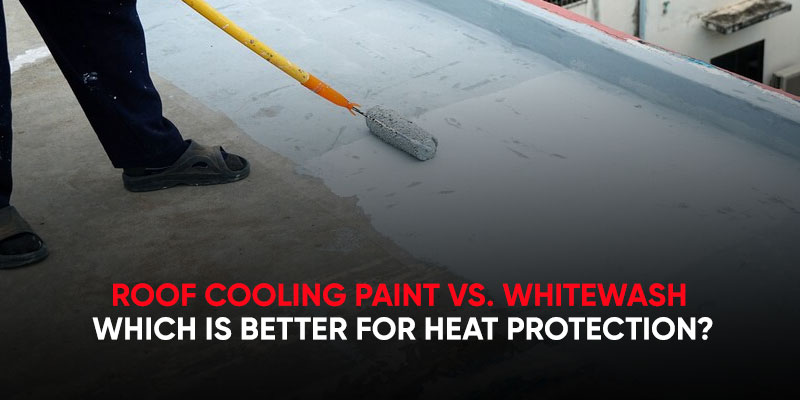
Roof Cooling Paint vs. Whitewash: Which Is Better for Heat Protection?
As summer temperatures rise across cities, rooftops absorb a tremendous amount of heat turning homes and buildings into virtual ovens. For homeowners and property managers, this heat build-up not only causes discomfort but also increases dependence on air conditioners, leading to higher electricity bills.
One of the most effective ways to reduce indoor temperature is by cooling the roof surface. But that brings us to an important question: Should you choose traditional whitewash or modern roof paint for cooling?
While both options aim to reflect sunlight and reduce heat, they differ significantly in terms of performance, durability, and long-term value. In this article, we’ll break down everything you need to know to make the right choice for your roof.
Why Your Roof Matters in Indoor Temperature Control?
You may not realize it, but your roof plays a major role in determining how hot your indoor space feels especially during the summer months.
Here’s how it works:
- When the sun’s rays hit your roof, the surface absorbs heat and transfers it downward.
- In hot climates, rooftops can reach temperatures over 60–70°C (140–158°F).
- This heat eventually seeps into your living spaces, making rooms hotter and air conditioning less effective.
In fact, studies suggest that over 60% of heat gain in single-storey buildings comes through the roof. That’s why adding a roof coating to reduce heat temperature whether traditional whitewash or roof cooling paint can significantly reduce indoor temperatures.
What Is Roof Cooling Paint?
Roof cooling paint (also called cool roof paint or reflective roof coating) is a specialized paint designed to reflect solar radiation, particularly UV (ultraviolet) and infrared rays, which are responsible for heating the roof surface.
Unlike regular paint, roof cooling paint is formulated with advanced ingredients such as ceramic particles, elastomeric resins, or acrylic polymers that enhance reflectivity and provide weather resistance.
How It Works:
- High solar reflectance: Bounces sunlight off the roof.
- High infrared emittance: Releases absorbed heat more effectively.
- Waterproof barrier: Protects roof from rain and cracks.
Key Benefits:
- Can reduce roof surface temperature by up to 15–20°C.
- Helps lower indoor temperature by 4–6°C.
- Minimizes load on air conditioners, reducing electricity bills.
- Lasts for 5–10 years with minimal maintenance.
What Is Whitewash for Roofs?
Whitewash (also known as lime wash or chuna coating) is a traditional method used across India and other hot countries to cool rooftops. It involves applying a layer of lime-based white paint to the roof surface, which reflects sunlight due to its light color.
While whitewash has been used for decades and is low-cost and natural, it has several limitations in terms of performance and durability.
Characteristics:
- Made from slaked lime or powdered limestone mixed with water.
- Reflects visible light (but not UV or infrared rays).
- Washes away easily with rain.
- Requires reapplication every 1–2 years.
Pros
- Inexpensive and easily available.
- Eco-friendly and non-toxic.
- Good for temporary cooling in mild climates.
Roof Cooling Paint vs Whitewash: Comparison
To understand which solution is better, let’s compare both options on key performance parameters:
| Feature | Roof Cooling Paint | Whitewash |
| Heat Reflectivity | High (reflects UV + IR rays) | Medium (mostly visible light) |
| Durability | 5–10 years | 1–2 years |
| Water Resistance | Yes | No |
| Maintenance | Low | High (needs frequent re-coating) |
| Eco-friendliness | Yes (non-toxic formulas available) | Yes (lime-based and biodegradable) |
| Cost | Moderate to High (once in 5–10 years) | Low (but recurring annually) |
| Cooling Efficiency | High (scientifically proven) | Moderate |
| Aesthetic Value | Available in multiple colors, matt finish | Plain white finish |
While whitewash may seem affordable at first, roof cooling paint offers better long-term value, higher efficiency, and reduced maintenance. If you’re serious about controlling indoor heat, roof cooling paint is the smarter investment.
Which One Should You Choose?
Now that we’ve compared both options, how do you decide?
Choose Roof Cooling Paint if:
- You live in a city with extreme summer heat (like Delhi, Jaipur, Ahmedabad, etc.)
- You want long-lasting results (5–10 years).
- You’re looking to reduce your air conditioning bills.
- Your building needs waterproofing or surface protection.
- You want better aesthetic appeal and multiple color options.
Choose Whitewash if:
- You’re on a tight budget and need a short-term fix.
- You live in a mild climate with less intense heat.
- You are treating a temporary or rental property.
- You’re open to reapplying every year for results.
Conclusion:
While both whitewash and roof cooling paint serve the same basic function to reflect heat and reduce temperature, only one offers real long-term protection.
Roof cooling paint is a scientifically developed, durable, and effective solution for modern homes and commercial buildings. It not only reflects sunlight but also provides a water-resistant, weatherproof barrier that can last for years.
Whitewash, although budget-friendly and traditional, lacks the performance and durability to truly compete.
So, if your goal is to reduce heat gain, improve indoor comfort, and save on cooling costs year after year, cooling roof paint is the better choice. For trusted solutions, HeatCure in Noida, India delivers high-performance coatings designed for long-lasting protection and comfort.
Looking for the Best Roof Cooling Paint for Your Home or Building?
At the end of the day, cooling your roof is one of the most affordable and impactful ways to reduce indoor heat. But choosing the right product makes all the difference.
Whether you’re a homeowner, builder, or facility manager, switching to roof cooling paint can help you fight summer heat more efficiently, reduce energy usage, and protect your roof for years to come.
Talk to our experts today to find the best roof cooling paint suited to your climate, budget, and building needs.

Comment (0)