
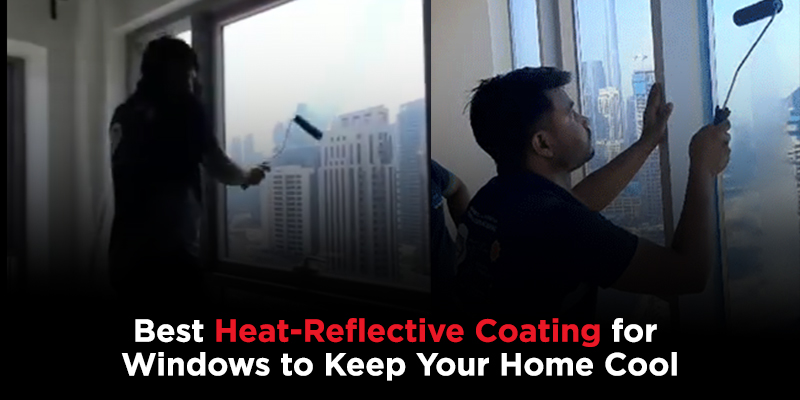
Best Heat-Reflective Coating for Windows to Keep Your Home Cool
Rising indoor temperatures during Indian summers are more than just uncomfortable they lead to skyrocketing energy bills and overworked air conditioners. One of the smartest, most energy-efficient ways to beat the heat is by applying heat reflective coating for windows. But how does it work, and which option is best for your home or office? Let’s dive in.
What Is a Heat Reflective Window Coating?
Heat reflective coating is a specially formulated solution that is applied directly to glass surfaces. Its main purpose is to reflect a significant portion of the sun’s infrared (IR) and ultraviolet (UV) rays before they enter your living or working space.
These coatings are often made of nano-ceramic, low-emissivity (Low-E) materials, or metallic oxides that block thermal radiation while maintaining light visibility. Think of it as an invisible shield that keeps your rooms cooler without compromising natural daylight.
How Does Heat Reflective Coating Help in Keeping Homes & Offices Cool?
Here’s how this innovative coating improves thermal comfort:
- Blocks Solar Radiation: Reflects up to 80% of infrared heat, significantly reducing solar heat gain.
- Lowers Indoor Temperature: Can bring down the internal temperature by 5°C to 8°C.
- Reduces Energy Bills: Less reliance on air conditioning results in substantial savings.
- Protects Interiors: Blocks over 99% of UV rays that cause fading in furniture, curtains, and flooring.
In commercial buildings with large glass façades or sun-facing homes, this makes a dramatic difference in comfort and utility bills.
Types of Heat Reflective Coatings for Windows
Before choosing the right solution, it’s essential to understand the available types:
1. Nano-Ceramic Coatings
- Made from non-metallic, non-conductive ceramic particles.
- Offers superior clarity and minimal reflection.
- Ideal for homes and offices where visibility and aesthetics matter.
2. Low-Emissivity (Low-E) Coatings
- Thin metallic layers that reduce emissivity (ability to emit absorbed heat).
- Available in soft coat and hard coat options.
- Commonly used in energy-efficient glass windows for offices.
3. Metallic Oxide Coatings
- Typically include silver, titanium, or tin oxide.
- High reflectivity and durability.
- Slightly tinted; best suited for office buildings.
4. Liquid-Applied Reflective Films
- Applied via spray, roller, or brush.
- Affordable and DIY-friendly.
- Great for existing glass windows at home.
Best Heat Reflective Coatings in India (2025 Picks)
If you’re searching for high-quality products available in India, here are some trusted options:
|
Product |
Type | Best For | IR Rejection | UV Rejection |
|
HeatCure |
Liquid Nano | Homes & Offices | 89% | 92% |
|
3M Prestige Series |
Nano-Ceramic Film | Homes & Offices | Up to 97% | 99.9% |
| Garware Suncontrol | Metal-Based Film | Offices | 85% |
99% |
| Saint-Gobain SunBan | Low-E Coated Glass | Commercial Use | 70% |
95% |
Always consult with a local installer to assess compatibility with your existing glass type.
Heat Reflective Coating vs Window Tint Film: What’s Better?
Both heat reflective coatings and window films serve similar purposes, but differ in execution:
|
Feature |
Coating | Tint Film |
|
Application |
Painted/Sprayed | Pasted Sheet |
|
Clarity |
Higher | May reduce visibility |
| Durability | 5–10 Years |
3–5 Years |
| Reversibility | Permanent/Semi |
Easily removable |
| Cost | Moderate–High |
Low–Moderate |
If your priority is aesthetics, go for ceramic coatings. For budget solutions, metallic tint films are good, especially for offices.
Installation Process for Heat Reflective Coatings
Installing heat reflective coating is best left to professionals, though some products allow DIY application. The typical process involves:
- Glass Cleaning: Dust and oils must be thoroughly removed.
- Masking: Edges and frames are masked to avoid overspray.
- Application: Using a spray gun, roller, or brush.
- Curing Time: Ranges from 24 to 72 hours for optimal adhesion.
- Quality Check: Ensure even spread and clarity post-application.
Pro tip: Avoid installation on rainy or humid days for best results.
How Long Does Heat Reflective Coating Last?
A good quality heat reflective coating can last 5 to 10 years, depending on:
- Type of material used (nano-ceramic > metallic)
- Weather exposure (direct sun, pollution)
- Cleaning habits (avoid harsh chemicals)
- Installation quality
Annual maintenance checks can help extend lifespan, especially for commercial buildings.
Benefits of Heat Reflective Coating for Homes and Offices
- Thermal Comfort: Instantly makes rooms cooler.
- Energy Savings: Cuts AC usage by up to 30%.
- Natural Light: Maintains brightness while blocking heat.
- Privacy Boost: Some coatings offer a one-way view.
- Sustainability: Reduces overall carbon footprint.
Offices with high occupancy especially benefit from the comfort and reduced HVAC loads.
Is Heat Reflective Coating Worth It for Indian Climate?
Absolutely, especially for cities like Delhi, Mumbai, Ahmedabad, and Jaipur where summer temperatures regularly cross 40°C. South and coastal India also benefit due to prolonged sun exposure and rising humidity.
- Homeowners: West- or south-facing balconies and living rooms feel drastically cooler.
- Commercial Spaces: Energy efficiency and interior protection make it a practical long-term investment.
Final Thoughts
If you’re looking to beat the Indian summer heat without cranking up your AC all day, heat reflective coating for windows is one of the smartest, most eco-friendly upgrades you can make. It’s cost-effective, long-lasting, and compatible with both homes and offices.


Comment (0)