
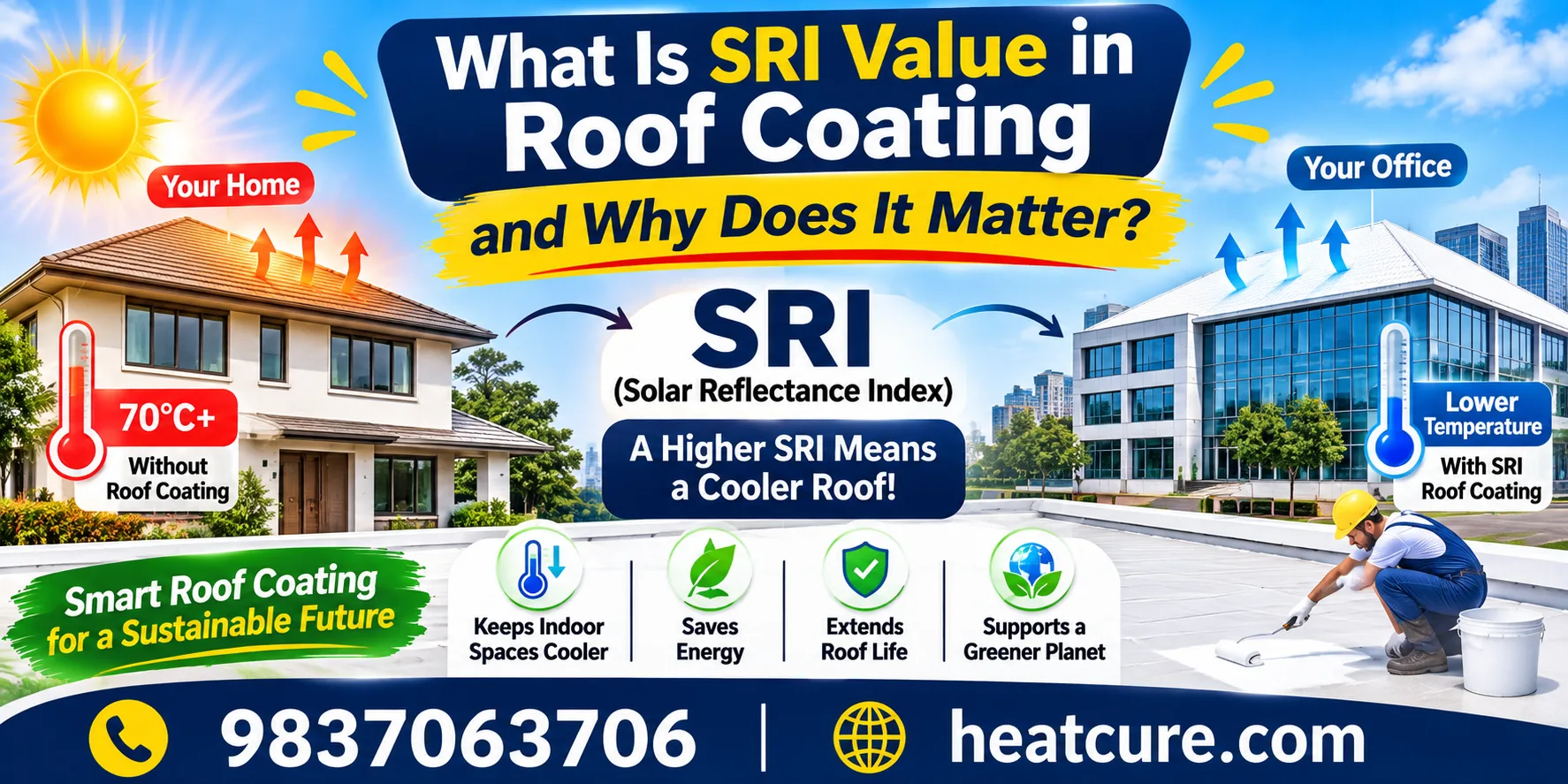
What Is SRI Value in Roof Coating and Why Does It Matter?
Choosing the right roof for your home means looking at things you may never have thought about before. One of the most overlooked is SRI, or Solar Reflectance Index, which shows how well a roof reflects the sun’s heat. This matters a lot here in India, where summers can go from mild to scorching hot almost overnight.
Our roofing products offer strong SRI ratings, far better than common options like asphalt shingles. Let’s break down what that means and why it matters, whether you’re a homeowner planning a new roof or a dealer helping customers choose metal roofing.
What Is SRI Value?
The Solar Reflectance Index (SRI) measures how well a roof surface reflects sunlight and releases the heat it absorbs, combined into one simple number. The scale is based on a standard black surface (0) and a standard white surface (100). A value close to 0 means the surface soaks up heat like a cast-iron pan, while a higher value means it bounces most of the sun’s energy back and stays much cooler. Highly advanced surfaces can even score above 100, which is why a good reflective roof coating with a high SRI can make such a noticeable difference to indoor temperatures.
The Two Ingredients Behind SRI
SRI is calculated from two measured properties, and both are needed to get the full picture:
- Solar reflectance: The share of sunlight that bounces off the surface, measured on a scale of 0 to 1.
- Thermal emittance: The share of absorbed heat that the surface releases as infrared, also measured from 0 to 1.
Bare polished aluminum is a good example of why both matter. It reflects sunlight well but releases heat poorly, so it can still get very hot. Most nonmetallic coatings have an emittance of around 0.85 to 0.90. A good roof cool coating scores high on both, which is how HeatCure’s roof coating achieves an SRI value of 112.
Why SRI Predicts Real Temperatures?
SRI is calculated using a standard model of sun, wind, and air temperature. Under the same hot afternoon sun, a surface with an SRI of 100 can stay 20°C or more cooler than a black surface. While it’s a model and not a direct temperature reading, it matches real-world results closely enough that building codes and green rating systems rely on it.
That’s the real connection between SRI and cool roof performance: the higher the SRI, the cooler the roof surface, and the less heat enters the building. It’s also why choosing a heat-reflective paint with a high SRI value can make top-floor rooms noticeably more comfortable in summer.
Initial vs Aged SRI Values
This is where many buyers get confused.
Initial values are measured on a fresh sample. They’re useful, but they show the coating at its best.
Aged values are measured after three years of outdoor exposure or accelerated weathering. Over time, dirt, mildew, and UV damage can reduce reflectance by 10 to 20 percentage points. The Cool Roof Rating Council publishes both values for rated products.
When comparing quotes, always look at aged values. A coating that starts at an SRI of 110 but drops to 70 isn’t better than one that starts at 100 and stays close to 90. Choosing a coating with strong UV protection paint properties helps it hold its reflectance for longer.
Why Do High SRI Scores Matter?
- Lower energy bills: A roof with a high SRI stays cooler, so less heat passes into your top floor. Your AC doesn’t have to work as hard on the hottest days, and the savings add up over the life of the roof.
- Green building certifications: For commercial projects or homes aiming for LEED, IGBC, or similar certifications, SRI is one of the key metrics reviewers check. The wrong SRI value can mean missing out on certification points.
- Better comfort: Anyone who has spent a summer afternoon under a dark roof knows how hot it gets. A cooler roof surface means a more comfortable space, especially in buildings without air conditioning.
Unlike glass wool heat insulation, which only slows down heat after it has entered the roof, a high-SRI coating reflects most of the heat before it gets in.
Where Building Codes Use SRI?
SRI ratings for cool roofs appear in several building codes and green rating systems, each with its own minimum requirement:
- ECBC (India): Roofs with a slope under 20 degrees need an initial solar reflectance of at least 0.70 and an emittance of at least 0.75.
- IGBC: Low-slope roof credits require an SRI of 78 or higher.
- LEED v4: Low-slope roofs need an initial SRI of 82 or an aged SRI of 64.
Since each system sets a different standard, always check which version your project follows before choosing a reflective roof coating. A coating that meets one code may fall short of another.
How to Read a Roof Coating Data Sheet?
Before you choose a heat-reflective roof coating, check its data sheet carefully and ask these questions:
- Is the SRI value calculated from tested reflectance and emittance, or just claimed?
- Is it the initial value or the aged value?
- Which testing standard was used, such as ASTM E1980, E903, or C1549?
- Was it tested by an independent lab?
Color matters too. Darker shades of a cool coating usually have a lower SRI than white, which is useful for architects who want non-white finishes. Just make sure to check the SRI for each shade separately, as it can vary a lot from one color to another.
What SRI Doesn’t Tell You?
SRI shows how well a roof reflects heat, but it doesn’t tell you anything about insulation, waterproofing, or how long the coating will last. Even a high-SRI roof without insulation can still let some heat through. That’s why, on large RCC buildings, a cool roof coating works best when paired with proper insulation and waterproofing. SRI is an important part of keeping a building cool, but it’s only one part of the bigger picture.
Why Does SRI Value Matter?
If you’re a homeowner who simply wants a cooler home and lower electricity bills, SRI is one of the best ways to judge a roof coating. A high-SRI coating keeps your terrace and top-floor rooms noticeably cooler, so your AC doesn’t have to work as hard during long Indian summers.
If you’re a builder, architect, or contractor working on green-certified projects, knowing the SRI value helps you meet requirements for ratings like IGBC or LEED. It also helps you give clients clear, honest answers when they ask about energy savings.
Either way, it shows that a roof choice isn’t just about how it looks. The coating you pick has a real impact on comfort, energy use, and long-term savings.
Have questions about which coating suits your roof? Get in touch with the HeatCure team, and we’ll help you find the right solution for your space.
Frequently Asked Questions
Q1. What is a good Solar Reflectance Index (SRI) for an Indian roof?
For low-slope roofs, 78 or higher is the common IGBC benchmark. Higher is better, provided the age value holds.
Q2. Can SRI exceed 100?
Yes. It means the surface runs cooler than the standard white reference.
Q3. Is SRI the same as solar reflectance?
No. SRI combines reflectance and emittance. Reflectance alone ignores how well heat is released.
Q4. Does a dark color always mean low SRI?
Usually, cool pigments reflect infrared even in darker shades, so a dark cool coating can beat a standard light paint.
Q5. Who certifies SRI values?
Independent bodies like the Cool Roof Rating Council (CRRC) test and list cool roof products, so check if a coating’s SRI is independently verified.


Comment (0)